Nutrixe
No, soy lecithin (E322) contains no gluten: soy is a legume, and lecithin is extracted from its oil. It is written in bold because soy is an allergen, which often makes people think it is a gluten problem. In a chocolate bar or a spread, what should stop someone with coeliac disease is elsewhere: a biscuit, malt or a traces warning.
What lecithin is
Regulation (EU) No 231/2012 defines lecithins (E322) as mixtures of phosphatides obtained by physical procedures from plant or animal foods. They are phospholipids, special fats extracted from oilseeds or egg yolk.
The European Food Safety Authority (EFSA), which re-evaluated them in 2017, describes how they are made: soybeans are pressed to obtain crude oil, water is added, the mixture is heated, and the phosphatides separate from the oil. The main source is soy; sunflower, rapeseed, maize, cottonseed and egg yolk are also used.
Regulation (EC) No 1333/2008 classes it among emulsifiers: substances that make it possible to form or maintain a homogeneous mixture of phases that don’t mix, such as oil and water.
Soy: an allergen, not a gluten cereal
Gluten comes from wheat, barley and rye. Soy is not a cereal: it is a legume, as our article on soy sauce explains, where the gluten comes from the wheat added during brewing, never from the soy.
Soy is, however, one of the fourteen allergens in Annex II of Regulation (EU) No 1169/2011. Only four of its derivatives are exempt from labelling: fully refined soybean oil and fat, and tocopherols, phytosterols and plant stanol ester derived from soy. Lecithin is not one of them: it must be listed with the word soy emphasised, hence the “lecithins (SOY)” in bold. For people allergic to soy, that makes sense: EFSA notes that the protein pattern of standard soy lecithin is very similar to that of soy flour.
For someone with coeliac disease, that bold type says nothing about gluten.
Sunflower, rapeseed and egg lecithin
- Sunflower lecithin: neither a gluten cereal nor an allergen on the EU list. Bonne Maman uses it in its spread, below.
- Rapeseed lecithin: the same, no gluten and not an Annex II allergen.
- Egg lecithin: no gluten, but egg is an allergen, emphasised like soy.
- “Lecithins” or “E322” on their own: the origin isn’t stated. None of the possible sources is a gluten cereal.
In chocolate and spreads
Out of ten common chocolate bars and spreads checked for this article (Nutella, Bonne Maman, Nocciolata, Poulain, Côte d’Or, Milka, Nestlé Dessert, Lindt), nine contain lecithin; only Lindt Noir Intense 70% goes without. Yet according to EFSA, the biggest sources of lecithin in Europeans’ diets are pastries, cakes and bread, products made with wheat flour: their gluten comes from the flour, not the emulsifier.
In the chocolate aisle, lecithin sometimes sits next to the real gluten ingredients: the wheat flour in a Kinder Bueno, the barley malt extract in some Lindt chocolates or a Kinder Joy, covered in our brand-by-brand article on sweets and chocolate. Nutella combines soy lecithin with the manufacturer’s “gluten free” claim: our article on Nutella explains what that claim is worth, and why the brand’s biscuits don’t share it.
Three products, and what the scanner says
These three products are sold in France.
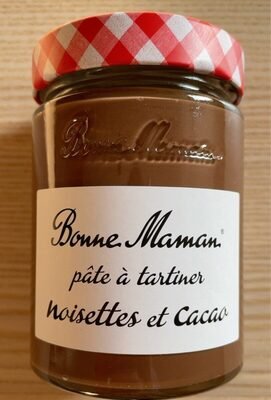


Soy lecithin or any other kind never changes the gluten verdict. The Milka bar owes its verdict to its traces line.
Photos and ingredient lists: Open Food Facts, a collaborative open-licence database, retrieved on 16 November 2026. Recipes change: the label on the product in your hand is what counts.
What the Nutrixe scanner does
For gluten, lecithin never triggers a warning, whether it is soy, sunflower or of unstated origin: the scanner looks for wheat, barley, rye, malt and traces warnings.
For subscribers who also track soy, the reading changes: “soy lecithin” counts as soy, since it is not exempt; sunflower lecithin doesn’t count; and “lecithins” or “E322” with no origin are marked “To check”, because the label doesn’t settle it.
The table
| No particular risk | To check | Contains gluten |
|---|---|---|
| Soy, sunflower, rapeseed or egg lecithin (E322) | Chocolate and spreads: the traces line | Chocolate with biscuits, cereals or barley malt |
| Spread with no cereal and no traces warning | Lecithins of unstated origin, if you are allergic to soy | Biscuits filled with spread |
| Bread, pastries and cakes made with wheat flour |
In short
- Lecithin is extracted from an oil (soy, sunflower, rapeseed) or egg yolk: no gluten.
- Soy is in bold because it is an allergen, and lecithin is not exempt.
- In chocolate, it acts as an emulsifier; any gluten comes from biscuit, malt or traces.
- The Nutrixe scanner ignores lecithin for gluten, and counts it as soy for those who track it.
“Lecithins (SOY)” in bold on the wrapper? The Nutrixe scanner tells you whether it is gluten or another allergen, and reads the traces line for you. Discover the app.
Read on: Nutella, sweets and chocolate, brand by brand, xanthan and guar gum and “may contain” warnings.
Sources
- Regulation (EU) No 231/2012, Annex, E 322: lecithins are mixtures or fractions of phosphatides obtained by physical procedures from animal or vegetable foodstuffs (original text of the Annex, read on 16 November 2026).
- Regulation (EC) No 1333/2008, Annex I: definition of emulsifiers.
- Regulation (EU) No 1169/2011, Annex II: cereals containing gluten; soybeans and products thereof, except fully refined soybean oil and fat, tocopherols, phytosterols and plant stanol ester derived from soy; eggs.
- EFSA, Re-evaluation of lecithins (E 322) as a food additive, EFSA Journal, 2017; 15(4): e04742: sources (mainly soy, then sunflower, rapeseed, maize, cottonseed, egg yolk), production from crude oil, protein pattern of soy lecithin close to that of soy flour, main contributing food categories.
- Open Food Facts, product entries 3608580065340 (Bonne Maman, hazelnut and cocoa spread), 3045140118502 (Milka, whole hazelnuts) and 7613035040823 (Nestlé Dessert, dark), and for the ten-product check: 3017620422003 (Nutella), 8052575090254 (Nocciolata organic), 3664346312936 (Poulain, spread), 3046920022651 (Lindt, Noir Intense 70%), 5410081200551 (Côte d’Or, original milk), 7622210995063 (Côte d’Or, milk hazelnut) and 3664346305860 (Poulain, Noir Extra); consulted on 16 November 2026.
This information is no substitute for medical advice. If you have coeliac disease or a soy allergy, build your diet with your doctor or a dietitian; a patient association such as Coeliac UK or, in the US, the Celiac Disease Foundation can help.